
by Sister Karen Lueck
The beginning of Lent signals the start of a six-week journey of transformation, if we commit ourselves to it. As a Franciscan, I am already committed to ongoing conversion, which means learning to live out the Gospel of Jesus, the Good News, every hour of every day. So it helps to have a designated time to really focus on our ongoing journey.
Lent is a sacred time. But I must admit that when I was younger, I didn’t like Lent at all. To me, it felt like a time of drilling down into our sin and shortcomings. As if I didn’t do that every day already! I was always berating myself for not being good enough, not doing the right thing, not pleasing people. It was a heavy load to bear, and there were many nights when I cried myself to sleep. So, Lent, with its increased emphasis on sin and repentance, was not a welcome or helpful event for me.
In mid-life, through therapy and spiritual direction, I discovered that I suffered from shame. Here is how I described it in my book “The Green Thread: Reclaiming Our Spiritual Authority:”
“Shame is the inner sense of feeling flawed or insufficient as a person. Shame is often confused with guilt, but the two feelings are quite different. Guilt is about doing something wrong; shame is about being wrong. Guilt is about morality, while shame is about acceptability. With guilt, one can make amends and there is hope. But with shame, there seems to be no solution except nonexistence, because shame is about the self.”
Many people suffer from shame, especially women, since we have been belittled and discriminated against for centuries. Through the help of many beautiful and holy people, I was able to begin the journey of healing from that shame. Now I can say that I love myself (at least most of the time.) And I want to help myself and other women heal from the oppression they have felt for far too long.
One of the areas I focus on in my writing and speaking is goodness—seeing it in myself, in others, in nature, everywhere. As I wrote in my book, “One of my core beliefs is that people are all created basically good and remain basically good … I believe that even when we sin and go astray, the spark of the Divine remains central to our being and constantly yearns for unity with God.”
During this period of Lent I want women, especially, to see themselves not as sinners, but as the beloved of God. It makes a big difference. If we identify as sinners, we spend a lot of time looking at and judging self. But if we identify as the beloved of God, we are able to look outward and reach out to God and others to make the world a better place.
Unfortunately, the resources we receive from the church to help us on our journey are usually written or proclaimed from a male perspective, which is fine for men, but often less than helpful for women. Christian theology has long named pride as one of the cardinal sins. And it may be for men, since they have had centuries of being in power and having control. Transformation for them may mean learning to be more humble, vulnerable and relational. But telling women that they need to heal from pride is not helpful or even applicable. Many feminist theologians point out that one of the greatest sins for women is not pride, but failure to love ourselves enough in order to make a difference in the world.

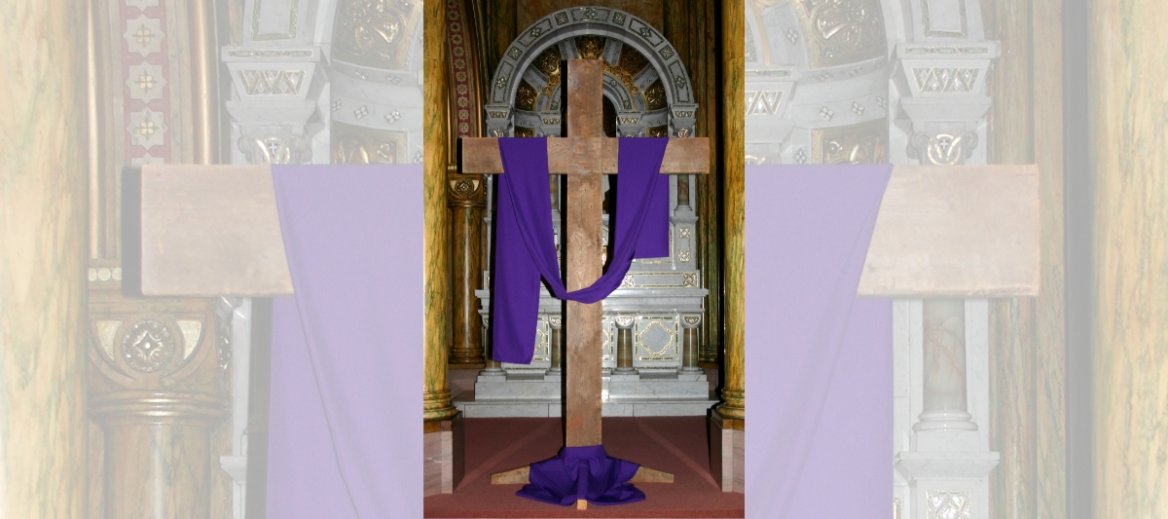
Image by Markus Diselrath from Pixabay
My purpose in writing these reflections for Lent is to offer women especially a resource written by a woman which hopefully sheds a new light on Lent and all that surrounds it. I also invite men to explore “the rest of the story” of Christianity. At this time of darkness and chaos in our country, we don’t need anything else which tells us how bad we are. What we need is to seek out the goodness of God present among us and in us. When we see ourselves as basically good, we have more energy to look outward, to proclaim goodness and to bring healing to the world. God is here, and we are God’s messengers of love and joy.
During this time of Lent, may you learn to acknowledge God’s deep love for you and rejoice in it. Then share that love with others.

"God is always known through vulnerability and mutual self-disclosure, and this will lead to an encounter
with God as Goodness." - Richard Rohr, "Eager to Love"
About Sister Karen
Karen Lueck is a Franciscan Sister of Perpetual Adoration. She has spent much of her life recognizing the goodness in herself and others. As an educator, mental health counselor, spiritual director and leader in her congregation of Catholic Sisters, she acted as a cheerleader for the people with whom she ministered. In her first book, "Cheering for the Good: Leading When It Matters," Sister Karen's urges all of us to step up and be the change.
Her new book, "The Green Thread: Reclaiming Our Spiritual Authority," is part memoir, part research narrative about what happens when church and earthly powers form an unholy alliance to keep people, especially women, subservient. "The Green Thread" debuted in September 2025. Visit Sister Karen's author page here.